

What Is A Cold Service Only Fluorescent Tube
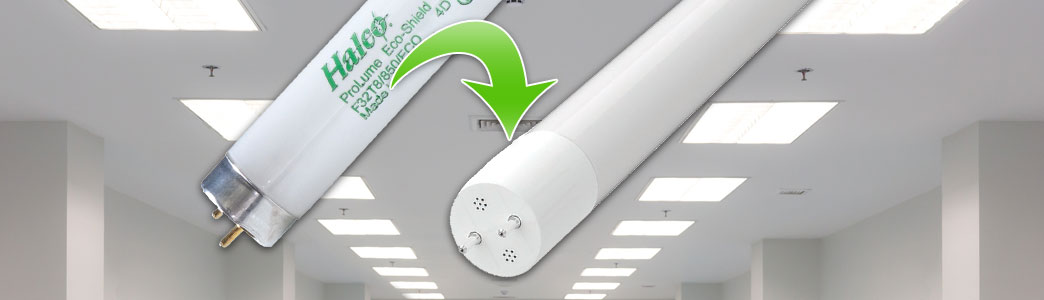
If you have an old fluorescent light fixture and the fluorescent tube is on its last legs, flickering or dimming, you could only replace the fluorescent tube and mayhap the associated anchor. Just there is a much smarter solution available, thank you to LED applied science. Compared to traditional fluorescent lighting, mod tubes made with light-emitting diodes will terminal much longer and cut your energy bills substantially.
Should I convert from a fluorescent tube to LED?
Among their many benefits, LEDs offer money- and environment-saving features: longer life, lower free energy consumption and an absenteeism of toxic mercury. LEDs also cast a much more than directional light than fluorescent tubes, which means they put the light where you desire information technology (down on the finished floor or work surface) rather than in places where it's wasted (up into the fixture).
Pros and Cons of LED Lighting Tubes
Truthful, LED lighting tubes toll more fluorescent tubes. But as LED lights have become more than popular, costs have been coming down, thanks to economies of scale. In improver, you can besides save the cost of replacing ballasts by making the switch to LEDs. LED linear tubes can final 50,000 hours or more, well-nigh twice the lifespan of comparable fluorescent tubes. That means that over fourth dimension, you volition be buying fewer replacement tubes. If you are paying someone to make the replacements, it besides translates into savings in labor costs over time.
Saving Energy, Money, and the Surroundings
The real savings can come over the long term, cheers to LED lighting�southward miserly energy utilisation. Compared to fluorescents, LED lights can save you twenty percent to 50 per centum or more in energy costs. Do the math and you will find that switching to LED lighting volition more than than pay you back for your initial investment over fourth dimension. In fact, given the long-term price savings involved, why would you await?
Also benefiting your wallet and your bottom line, LED lights too help the surroundings. Past burning less energy and requiring fewer replacements, they cut carbon emissions and landfill clutter.
In add-on, LED lights comprise no mercury, unlike their fluorescent counterparts. This component is so toxic that state and local laws require that fluorescents be recycled rather than dumped in the trash. Furthermore, fluorescents are fragile and can break, endangering the surround and the people around them. LED lights, on the other mitt, are shatterproof and much sturdier than fluorescents. That makes them a safer all-around choice for any application, particularly if children are using the space to be illuminated.
Too environmental and economic considerations, LEDs offer other benefits. Different fluorescents, they volition non give off an annoying, flickering light. LEDs as well deliver a brighter light, making them platonic for workspaces and accomplishing tasks. And different fluorescent lamps, LED tubes do not accept a wearisome warm-up period; instead they power up to 100% brightness instantly. In addition, LEDs are available in a wide range of color temperatures, from warm to cold, giving you the ability to cull the LED that�southward just right for the space you volition exist lighting and the use it will get.
When you sum up all the pros and cons of LEDs, you can see that they yield a net positive, whether for residential, commercial, or industrial employ.
Replacing Fluorescents with LEDs
When you decide to replace your fluorescent tubes with tubular LED lamps (or TLEDs), you lot have three basic options. Y'all can proceed the existing ballast and use ballast-compatible Type A LEDs for installation, or y'all can opt for ballast-bypass Blazon B LEDs, which don�t employ a anchor and take their own internal driver. The 3rd option, Type C, uses no ballast, like Type B, but has an external driver.
Type A: Anchor-Compatible / Directly-Fit
Ballast-compatible LEDs give you instant, plug-and-play results. You just remove the onetime fluorescent tube, plug in your new LED tube, and flip the switch. At that place�s no need to remove the old ballast. Information technology�s a super piece of cake installation with reduced up-front labor costs.
Although convenient, this option has a couple of disadvantages over the long term. Type A anchor-compatible LEDs tend to be more expensive than their bypass counterparts. Likewise, although they are more than energy-efficient than fluorescents, they are not as energy-efficient as ballast-bypass LEDs. Expect to save about twenty percent in free energy usage with anchor-compatible LEDs, compared to fluorescents. Non every Blazon A LED tube is compatible with every make and model of ballast. You�ll need to verify which ballast you have and whether or not information technology is uniform with the Type A LED yous�re looking at. Dimming control is limited to the capability of the ballast.
The last big drawback to ballast-uniform LED tubes is the fact that that the old anchor is all the same in operation and is still a bespeak of failure. And then even if the LED tubes are working fine, when the ballast fails over time, the LED tubes volition go dark and you will still accept to get back up into the fixture and replace it.
Type B: Anchor-Featherbed
Blazon B ballast-bypass LED tubes require the removal of the quondam fluorescent anchor. These tubes have their own internal commuter and run directly off line voltage. The lamp sockets, or tombstones, may besides require rewiring. There is additional labor involved in the initial installation versus ballast-uniform LEDs, but the end result is a much more reliable and longer-lasting associates equally the old anchor is eliminated from the excursion. Limited dimming capabilities are available.
Although Type B ballast-bypass LEDs tend to exist a little more expensive than anchor-compatible LEDs, they can save y'all an additional 20 percent in free energy usage (for a total of well-nigh 40% over fluorescent tubes). That means they will pay for themselves in the long run.
Blazon C: External Driver
Like Blazon B LEDs, Type Cs volition also require removal of the existing tube and ballast, and some rewiring. But in improver, the Type C will also necessitate an external remote driver and connecting it to the sockets. Opting for these LEDs with external drivers will entail some actress labor and expense, just it will pay off with even better efficiency and higher performance. These LEDs provide the best dimming and decision-making options as well.
Installation
Although they provide better efficiency, Type B and Blazon C LED lamps require a niggling more installation time and know-how. Removing or bypassing the former ballast will crave some rewiring of your calorie-free fixture. Although this tin can be washed with ordinary household tools and is non peculiarly hard, you should consult with a qualified electrician if you are not handy or knowledgeable about electricity, wiring, and lighting.
Also, if you are thinking about taking this on as a DIY project, yous should make certain to wear eye protection to protect your eyes in example the fluorescent tube shatters during removal. And, of class, you should ever refer to the manufacturer�southward instructions before retrofitting your LED linear lamps.
IMPORTANT: Always refer to the manufacturer�s installation instructions prior to retrofitting your LED linear lamps.
Are you confused, or practise you lot still have questions? We are but a phone call or e-mail away, and our lighting experts will be happy to work with you to aid you decide what�due south best for yous and your awarding.

Get a Custom Quote for LED Tubes
Contact united states of america today and let us assemble a custom quote for converting your project's linear fluorescent tubes to LED.
Related Items

What Is A Cold Service Only Fluorescent Tube,
Source: https://www.takethreelighting.com/converting-fluorescent-tube.html
Posted by: littlesqualf.blogspot.com
0 Response to "What Is A Cold Service Only Fluorescent Tube"
Post a Comment